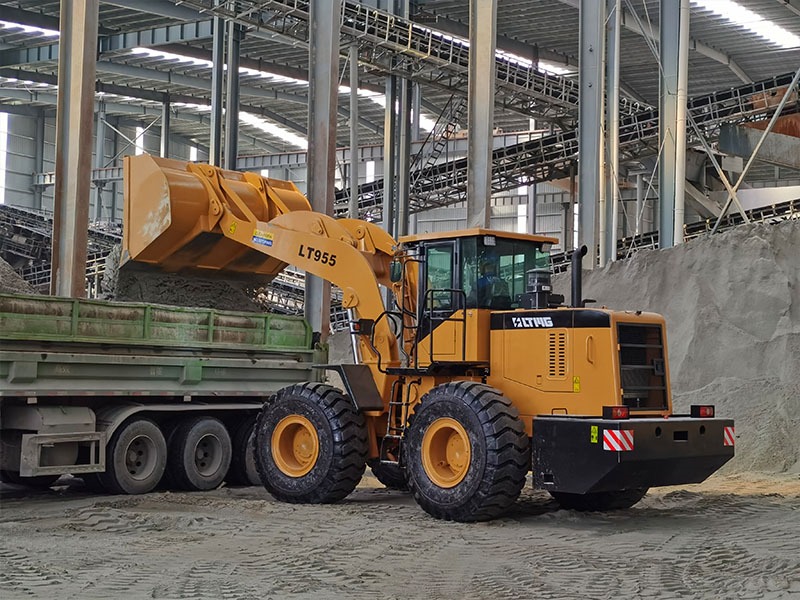
Wheel Loader vs. Skid Steer Loader: Which Should You Choose?
Oct 28, 2026
Choosing a wheel loader or a skid steer loader is not simply a matter of comparing which machine has more power. The right choice depends on the material you need to handle, the space available on site, how far the machine must travel, and how often you need to change attachments.
In a wheel loader vs. skid steer loader comparison, wheel loaders generally offer larger bucket capacities, faster travel speeds, better operator comfort, and greater efficiency in continuous material handling. Skid steer loaders stand out for their compact size, tight maneuverability, and compatibility with a wide range of hydraulic attachments.
For buyers looking for the best loader for construction, the key question is: Do you need a high-productivity loading machine or a compact, multipurpose tool carrier? The following comparison will help you decide.
Comparison Factor
Wheel Loader
Skid Steer Loader
Primary Advantage
High-volume material handling
Maneuverability and versatility
Required Working Space
Medium to large sites
Confined sites
Bucket Capacity
Generally larger
Generally smaller
Long-Distance Travel
Faster and more comfortable
Better suited to short movements
Ground Impact
Lower during normal turns
Greater disturbance on soft ground
Typical Applications
Stockpiles, quarries, yards, and farms
Landscaping, demolition, and utility work
Size, Maneuverability, and Site Access
A skid steer loader has a short wheelbase and turns by driving the wheels on each side at different speeds. It can pivot within nearly its own footprint, making it particularly useful in narrow alleys, residential yards, indoor facilities, demolition sites, and other work areas where obstacles leave little room to turn.
Its compact footprint also makes a skid steer easier to transport. Depending on the model, local regulations, and trailer capacity, it can often be moved efficiently between jobs without the heavier transport equipment required for a large wheel loader. This steering method does have disadvantages. Skid steering drags the tires sideways across the ground, accelerating tire wear and potentially damaging turf, finished pavement, or soft soil. Repeated turns in the same spot can also create ruts.
A wheel loader normally turns through an articulated joint between the front and rear frames. Although it needs more operating space, its tires roll through a turn instead of scrubbing sideways. Travel is therefore smoother, ground disturbance is lower, and the operator is generally more comfortable during repetitive loading cycles.
Size differences within the wheel loader category also matter. A mini wheel loader can enter areas that are inaccessible to a large loader while retaining articulated steering and a conventional front-loading layout. It can therefore offer a more balanced solution for farms, landscape supply yards, municipal projects, and smaller material-handling sites.
Before purchasing a machine, measure the following:
The width of the narrowest gate, entrance, or access road
Overhead clearance beneath roofs, power lines, and tree branches
The space available for turning around stockpiles
Trailer payload and transport height
Ground conditions during wet weather or the rainy season
Lifting Capacity and Working Height
Wheel loaders are designed to move large volumes of material efficiently. Their larger frames, heavier counterweights, and wider buckets make them well suited to loading trucks, managing aggregate stockpiles, handling feed, and carrying out continuous earthmoving work.
A wheel loader also tends to be more stable when traveling over uneven ground with a full bucket. Its longer wheelbase and articulated chassis provide a smoother ride, especially when material must be carried more than a few meters.
Skid steer loaders generally have smaller buckets than other compact machines in a comparable class, but they still deliver strong lifting performance for their size. Their lift paths usually fall into two categories:
Radial lift: The attachment follows an arcing path, which works well for digging, grading, and dumping over lower obstacles.
Vertical lift: The attachment travels mainly upward and provides greater forward reach near maximum lift height, making it better suited to loading trucks, stacking material, and handling pallets.
Do not compare machines by engine power alone. Check rated operating capacity, tipping load, bucket capacity, hinge-pin height, dump clearance, forward reach, and the weight of the attachments you plan to use. If the machine will power hydraulic tools, hydraulic flow and pressure must also be considered.
Material density also affects the choice. A bucket filled with wet soil, stone, or sand weighs far more than the same-sized bucket filled with mulch or grain. The loader and bucket should therefore be evaluated as a complete working combination rather than by bucket volume alone.
As a general rule, choose a wheel loader when daily productivity depends on moving high volumes quickly. Consider a skid steer when loads are moderate and site access or precise positioning matters more.
Attachment Versatility
A wide selection of attachments is one of the skid steer's strongest advantages. In addition to a general-purpose bucket, a skid steer can operate pallet forks, augers, trenchers, hydraulic breakers, sweepers, grapples, snow blowers, cold planers, brush cutters, and other specialized tools. This allows one machine to perform several stages of a project. A contractor might unload pallets in the morning, drill holes at midday, and clear construction debris in the afternoon without assigning three separate machines.
Compatibility must still be checked carefully before an attachment is purchased. A tool may connect mechanically to the quick coupler while the machine lacks the required hydraulic flow, operating pressure, electrical controls, or lifting capacity. High-flow hydraulic attachments in particular require a properly configured carrier.
Wheel loaders can also be equipped with quick couplers and attachments such as forks, grapples, snow blades, log grabs, and light-material buckets. Their main advantage is not the number of available tools, but their ability to carry heavier loads while maintaining high cycle productivity.
For buyers making a compact loader comparison, the key issue is how the machine will spend most of its working hours. If it will use several powered attachments every week, a skid steer is usually the more suitable platform. If it will spend most of its time loading and carrying with a bucket or forks, a compact wheel loader may be more productive.
Cost of Ownership and Maintenance
Purchase price is only one part of equipment cost. A complete evaluation should also include fuel consumption, tires, routine servicing, attachment purchases, operator hours, transport, downtime, and expected resale value.
A compact skid steer may have a lower initial purchase price than a larger wheel loader. When its attachments are used regularly, it can also replace several single-purpose machines. For contractors that frequently take on different types of small projects, this higher utilization can produce a strong return on investment.
Because every skid-steer turn produces tire scrub, tire wear can be significant on rough or abrasive surfaces. Solid tires offer better puncture resistance, but they may cost more and provide a firmer ride. Pneumatic tires are generally more comfortable but require regular pressure checks and protection from sharp construction debris.
Wheel loader purchase costs generally rise with machine size, but larger models move more material in each cycle. On a production-focused site, cost per tonne or per cubic meter is more meaningful than fuel use per hour alone. A larger machine may shorten total working time by completing the job in fewer cycles.
Routine maintenance requirements are broadly similar for both machine types and include:
Engine oil, coolant, and filters
Hydraulic oil, hoses, cylinders, and fittings
Tires, wheel nuts, and axle components
Pins, bushings, and grease points
Cutting edges and attachment locking mechanisms
The cooling system, particularly when operating in dusty conditions
Service access and local parts availability should also influence the purchase decision. Before buying, ask the supplier for maintenance intervals, a list of filters and wear parts, warranty terms, service manuals, and expected parts lead times. Planned maintenance is usually more economical than unexpected downtime caused by a failed hose, blocked cooling system, or worn attachment pin.
Best Applications for Each Machine
Choose a Wheel Loader When:
You need to move large volumes of sand, gravel, soil, coal, grain, or waste
Trucks must be loaded repeatedly throughout the shift
Material must be carried around a yard or large worksite
The machine will work on a farm, in a quarry, at a batching plant, in a port, or at a recycling facility
Operator comfort and travel speed affect daily output
You need a larger bucket and greater, more stable lifting capacity
A wheel loader is generally the more productive material-handling machine. Compact and mini models extend this advantage to small farms, municipal yards, landscape supply businesses, and urban construction sites.
Choose a Skid Steer Loader When:
Access is restricted by gates, buildings, or closely spaced obstacles
The machine must turn and reposition frequently in a confined area
Attachments need to be changed often during the job
The work includes trenching, drilling, sweeping, grading, or demolition
The loader must be transported frequently between smaller jobsites
Precise work is required close to walls or existing structures
A skid steer is usually the more capable multipurpose machine. Although it may carry less material per cycle, it can perform a wider range of specialized tasks.
A Simple Buying Rule
When comparing a wheel loader with a skid steer loader, first identify the type of work that will account for most of the machine's operating hours.
If more than half of those hours involve loading, carrying, and stockpile management in open areas, prioritize a wheel loader. If the machine will work mainly in confined spaces or use several hydraulic attachments, prioritize a skid steer loader.
If both descriptions fit your project, compare a skid steer with a mini wheel loader using the actual access dimensions, material weights, and daily production targets.
Conclusion
No single loader suits every application. A wheel loader is built for efficient material movement, while a skid steer's core advantages are compact access and the versatility provided by its broad attachment range.
Before requesting a quotation, list the materials you need to handle, required lift height, site access dimensions, travel distance, planned attachments, and expected operating hours. This information will help the supplier recommend an appropriate rated operating capacity, bucket size, hydraulic configuration, and machine class.
To select equipment for your specific working conditions, explore LTMG's wheel loader range and skid steer loader range, then provide your workload and site requirements for a more accurate recommendation.
FAQ
Can a Skid Steer Replace a Wheel Loader?
A skid steer can replace a small wheel loader for light material handling, landscaping, site cleanup, and short loading cycles. However, it is less suitable for continuous high-volume loading or carrying heavy material over long distances. In these conditions, a wheel loader generally provides a larger bucket, smoother travel, and higher productivity.
Which Is Better for Snow Removal: a Wheel Loader or a Skid Steer?
A skid steer is better suited to sidewalks, parking spaces, narrow entrances, and areas with many obstacles. It can use snow buckets, blades, pushers, and compatible snow blowers. A wheel loader is generally better for large parking lots, industrial yards, roads, and deep snow because it can push or carry more snow per pass. The final choice should reflect the area to be cleared, snowfall volume, required stacking height, and attachment type.
Which Machine Has Lower Maintenance Costs?
There is no universal answer. A skid steer is smaller and may cost less per service, but frequent turns on concrete or rough ground can lead to substantial tire wear. A wheel loader may require larger quantities of service fluids and more expensive components, but its tires generally experience less turning scrub. Compare expected annual operating hours, surface conditions, fuel use, service intervals, and local parts availability to estimate total annual cost.